


NbS in Cambodia
NbS for urban cooling
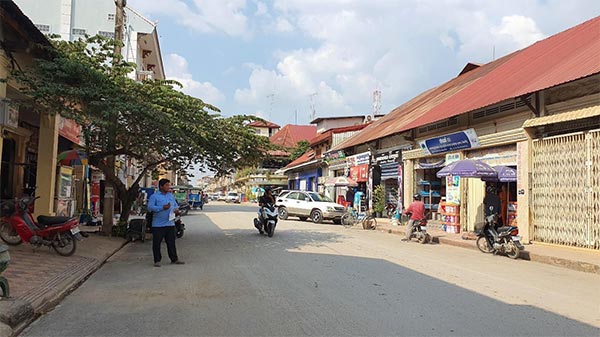
Street 2, near Chinese School and White Rose Restaurant (historical buildings)
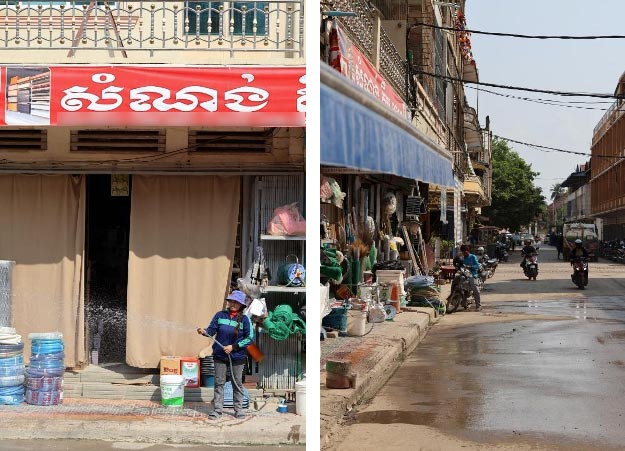
Woman spraying water to cool the house and road in Street 2, Battambang Municipality
This vision for this case study was to transform streets in Battambang's historical area into walkable, cool and smart corridors that respond to heat and flooding, and celebrate the city's unique culture.
As Cambodia’s second largest city and the economic hub of the western region, Battambang has experienced rapid population growth and urbanisation, yet its core still features historic buildings and riverfront streetscapes that are central to tourism and everyday life.
Streets in this area experience traffic congestion, poor road conditions, frequent flooding during the rainy season and significant urban heat. These challenges are expected to intensify with climate change.
What the case study explored
The original case study focused on Street 2 and nearby streets between the Sangkae River and the Battambang Royal Railway Station. It explored how modular NbS – such as linear wetlands, swales, infiltration gardens and street trees – could be integrated into central reservations and verges to improve drainage, increase canopy cover, reduce heat and create more attractive public spaces. The concept also included integrated smart sensors to monitor heat and pedestrian flows, supporting Battambang’s Smart City ambitions.
This work identified the potential for shaded, heat and flood-responsive streetscapes that could be piloted in one corridor and then replicated elsewhere in the historic area.
What happened next
Building on this concept, RUCaS worked with the Battambang Provincial Administration to design an NbS pilot along Road 501, a central corridor in the historic core.
MoU and Smart City partnership around Road 501
An MoU between Monash University and the Battambang Provincial Administration positioned Road 501 as a flagship green corridor within the city’s Smart City program. The corridor was used to demonstrate how NbS can improve drainage, cooling, accessibility and economic activity in the historic centre.
Inclusive co-design workshop for the green corridor
A co-design workshop in July 2025 brought together provincial departments, the Department of Women’s Affairs, disability organisations, youth groups, teachers, local businesses and residents. Participants mapped flooding, heat and access issues along Road 501 and co-created 3 NbS concept options for the central reservation.
Detailed NbS street design with local partners
Building on the workshop, RUCaS worked with design firm 1+1>2 and E2Design to refine detailed architectural and engineering designs of a preferred NbS option for 4 green sections along Road 501. The emerging design includes bioswales, infiltration gardens, shade trees, seating, inclusive play and exercise spaces, and safer crossing points while respecting the street’s heritage character.
Urban heat study to strengthen the investment case
To strengthen the business case, RUCaS commissioned a Battambang Urban Heat Study that used spatial heat mapping and microclimate modelling to compare baseline and NbS scenarios, and identify groups most exposed to heat stress. The findings feed into Battambang’s Smart City program and into Cambodia’s broader NbS and land use planning frameworks, helping ensure that lessons from Road 501 influence future investments in other Cambodian cities.
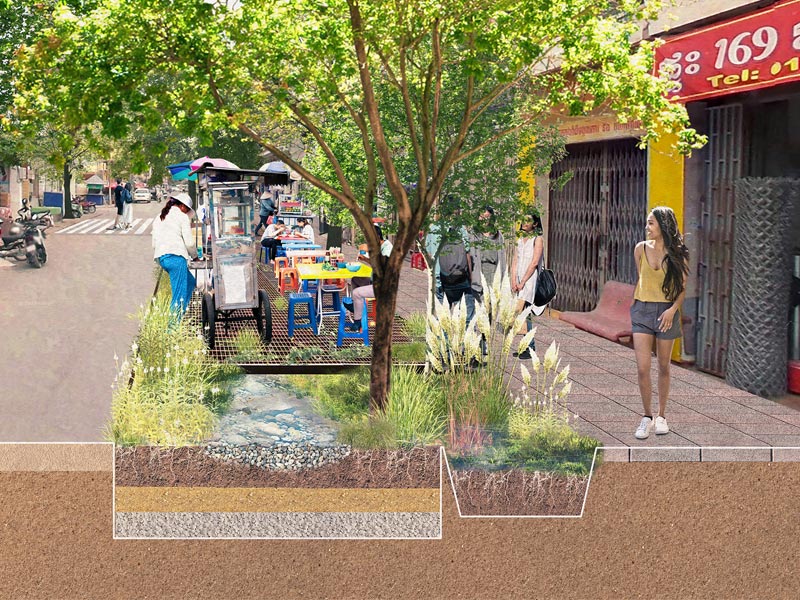
Battambang overall vision
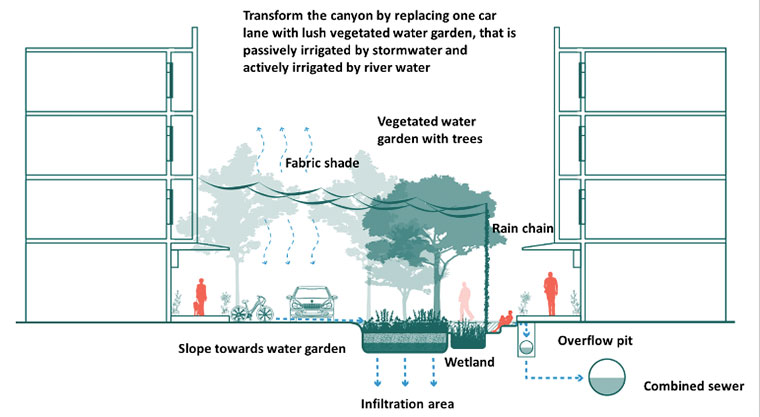
Design concept for NbS street in Battambang
What does a Water Sensitive City look like?
The CRCWSC has produced research, guidelines and
tools related to the following topics:
Integrated Urban Flood
Management
Climate change
mitigation
Community
engagement
Economics and
business case