
Resilient Urban Centres and Surrounds (RUCaS)
Makkasan Zone C Departure Park
Bangkok, Thailand


NbS in Thailand
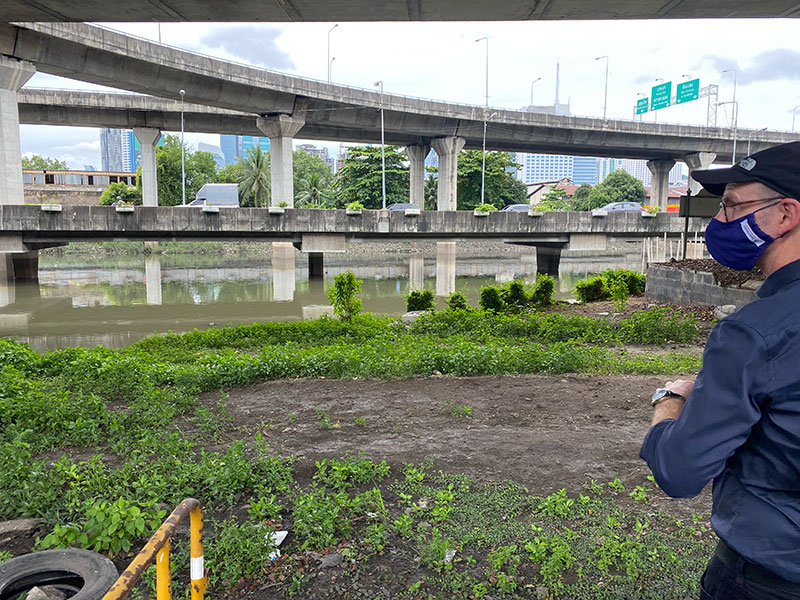
Makassan wetlands with flood detention, and expressways
The vision for this case study was to create an urban sanctuary at Makkasan that manages canal flows and water quality while providing much-needed green space in the heart of Bangkok.
The 497 rai land parcel, owned by the State Railway of Thailand (SRT), was once Southeast Asia's largest train production hub. Today, it includes railyards, open space, lakes and wetlands that detain floodwaters before they recede or are pumped to nearby canals.
This unique green pocket sits amid dense commercial, residential and transport infrastructure and is under increasing development pressure, including a proposed high-speed rail link between three gateway airports. Civic groups called for parts of Makkasan, particularly Zone C, to be preserved and enhanced as a public green area that links to Bangkok’s wider park and drainage network.
What the case study explored
Working with BMA, SRT, Kasetsart University, Urban Action, the Community Organizations Development Institute and the SRT Union, RUCaS developed a vision for Zone C as a multifunctional wetland and forest park. The concept includes two zones:
- an eastern wetland park with surface and subsurface wetlands, lakes and forest
- a western forest park with sports facilities and shaded green areas.
Across both zones, the case study integrated NbS into the landscape, combining water and nature play, improved access and shading, and multi-layered planting.
The case study explored how this vision could increase flood detention capacity, improve water quality within the canal system, provide accessible green–blue space for local residents and commuters, mitigate urban heat and enhance urban biodiversity. The focus was on how Makkasan could operate as part of a wider polder and canal system for Bangkok, rather than a standalone park.
What happened next
The Makkasan study site was used to support city-wide learning and national guidance on NbS, rather than a single on-site pilot.
Thai biofiltration guidance
RUCaS supported the translation of stormwater biofiltration guidelines into Thai so that municipal agencies and practitioners can more easily plan, build and maintain rain gardens and biofiltration systems that reflect local conditions. The work included a concise industry note putting the guidance in a Thai context to help municipal engineers and planners understand where and how biofiltration systems can be applied in dense, highly paved districts in Thai cities.
Seminars on polder water and multifunctional parks
In partnership with BMA, RUCaS convened a seminar series on “Water Strategy for Polder Cities: Designing Multifunctional Parks to Manage Polder Water Environments and Mitigate Flooding”. These sessions brought together BMA departments to explore how canal revitalisation, wetland systems and floodable parks can support flood management, water quality improvement and urban cooling across Bangkok’s polder network.
National knowledge sharing on integrated urban water management and NbS
A national knowledge sharing workshop on Integrated Urban Water Management and the Role of NbS further extended this agenda. The workshop engaged national agencies, universities and city authorities across Thailand in discussions about who benefits from NbS, how inclusive design can be embedded and how NbS can be incorporated across the water layers in urban areas. These layers include water supply, stormwater, wastewater, water for environment and groundwater.
NbS demonstration
Complementing the work on integrated urban water management, RUCaS and King Mongkut’s Institute of Technology Ladkrabang (KMITL) developed a low-cost stormwater planter box pilot as a small-footprint, scalable demonstration that integrates water management, cooling, biodiversity and public amenity within constrained urban spaces.
The planter box was installed in 2 locations during Bangkok Design Week 2026.
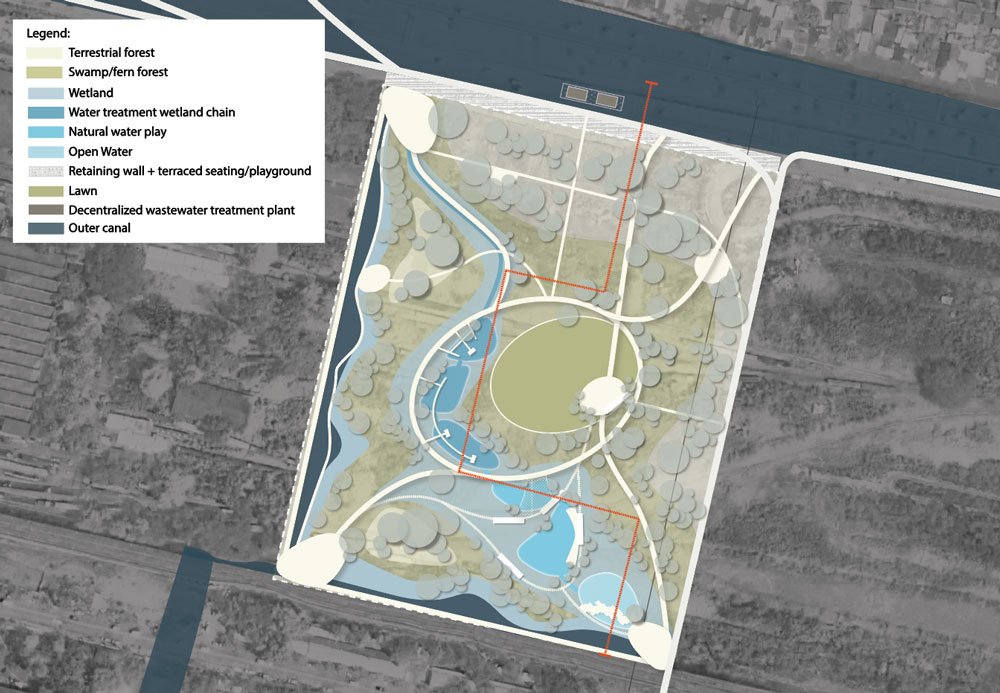
Indicative Plan (not to scale and illustrative only
What does a Water Sensitive City look like?
The CRCWSC has produced research, guidelines and
tools related to the following topics:
Integrated Urban Flood
Management
Climate change
mitigation
Community
engagement
Economics and
business case